Owned by the Student: How 7-Eleven Japan Quietly Out-Operated the American Original

Photo: NASA, Astronaut Michael Edward Fossum, Public domain, via Wikimedia Commons
There is a particular irony at the heart of modern convenience retail that most American shoppers have never considered: the world's most sophisticated convenience store operator is Japanese, and it owns the American company that invented the format. In 2005, Ito-Yokado's retail group—later reorganized as Seven & i Holdings—completed its acquisition of Southland Corporation, the Dallas-born creator of 7-Eleven. The student had purchased the teacher.
The transaction deserves more attention than it gets, because it is not merely a curiosity of corporate history. It is a case study in how operational culture, not technology or capital, determines who wins in retail.
The Fresh Food Reversal
American convenience stores were built around a simple proposition: tobacco, lottery tickets, bottled drinks, and a coffee machine of dubious provenance. Food, when it existed, was a heated roller item of uncertain age. The format was designed for impulse and habituation, not for meals.
7-Eleven Japan, under the legendary leadership of Toshifumi Suzuki, made a different bet. Suzuki concluded that the future of convenience retail was fresh food—rice balls, boxed lunches, sandwiches, hot prepared meals—delivered multiple times daily to stores small enough to serve a few city blocks. This decision cascaded through the entire operating model.
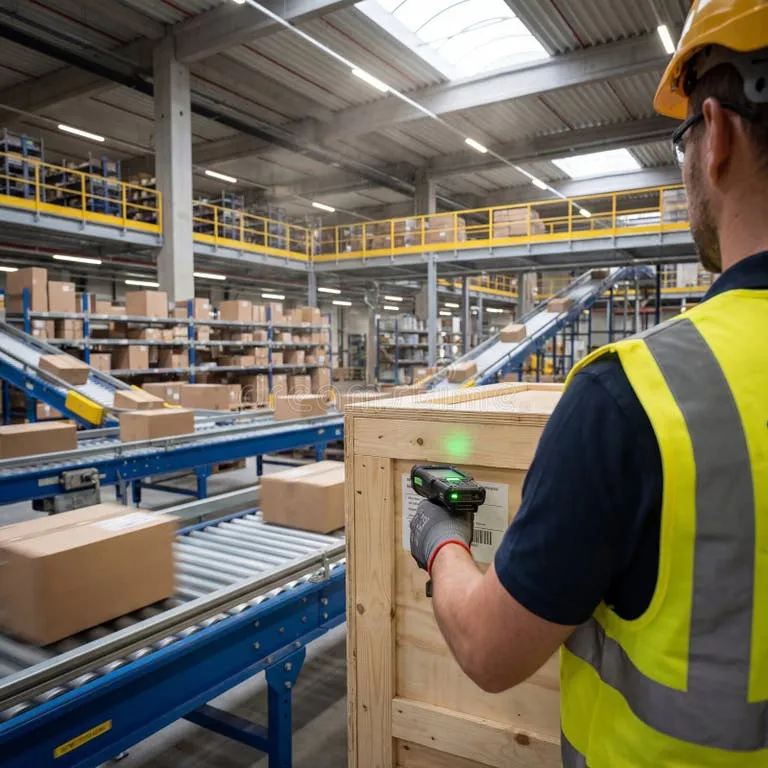
Fresh food at scale is a logistics problem of extraordinary difficulty. Product measured in hours of shelf life, not weeks, demands a distribution network capable of moving goods from regional kitchens to store shelves within a tightly controlled window. 7-Eleven Japan solved this by consolidating deliveries: instead of dozens of suppliers sending separate trucks to each store, a single temperature-controlled vehicle arrives several times a day carrying everything. The result is lower cost per unit moved, fresher product, and store staff who spend their time merchandising rather than receiving pallets.
American c-store chains have made genuine progress here—Wawa and Sheetz built loyal followings on food quality, and 7-Eleven's US operations have invested heavily in fresh programs. But the gap remains structural, not cosmetic.
Hyper-Local Merchandising as Doctrine
The second pillar of the Japanese model is merchandising granularity that borders on obsession. A 7-Eleven in a Tokyo office district stocks differently than one three subway stops away in a residential neighborhood. Store managers order against local demand patterns—weather, day of week, nearby events, the demographic rhythm of their catchment area—and are held accountable for the accuracy of those orders.
This is often mischaracterized as a technology story. The point-of-sale data and forecasting tools matter, but the technology merely surfaces information. The differentiator is that a store manager in Japan is expected to exercise judgment with that information, order-by-order, and to walk the floor twice a day checking freshness, facing, and temperature. The system assumes a trained human making thousands of small decisions weekly, supported—not replaced—by software.
In the US, the prevailing instinct has been to centralize: category management at headquarters, planograms pushed to stores, labor scheduled by algorithm. Centralization is cheaper and more scalable. It is also slower to respond to local reality, and it strips store operators of the very judgment the Japanese model depends on developing.
Inventory Discipline as a Cultural Artifact
The third pillar is the least glamorous and most important: ruthless inventory discipline. In the Japanese system, unsold fresh product is not marked down into oblivion or quietly shifted to a discount bin. It is pulled at end of life, its disposal recorded, and—critically—the reason for the overstock is fed back into the next order cycle. Waste is treated as information, not just cost.
This discipline extends upstream. Suppliers, kitchens, and stores operate against shared assumptions about sell-through, and chronic over-ordering is treated as a competence problem to be coached, not a margin line to be absorbed. The cultural premise is that inventory errors are visible, named, and corrected quickly. American retail culture, shaped by thin margins and high turnover, more often treats shrink and markdown as weather—unfortunate, unavoidable, priced into the model.
Why the US Struggles to Copy It
If the model is so effective, why hasn't it been fully transplanted? Three reasons recur.
First, the labor assumption is different. The Japanese system invests heavily in store-level training and tolerates the payroll that comes with it. American c-store economics, built on high-volume fuel and packaged goods, leave little room for a management development culture at the store level.
Second, the supply chain geography is different. Japan's density means a single delivery truck can serve many stores in a compact route. American distances punish the multi-daily fresh delivery model outside of dense urban cores, requiring regional adaptations that dilute the original design.
Third, and most fundamentally, the discipline is cultural. You can buy the forecasting software and the kitchen network. You cannot procure the norm that a store manager personally owns every unit of waste. That norm took 7-Eleven Japan five decades to build, and it is the actual moat.
The Takeaway for American Operators
For US convenience retailers, grocery-adjacent formats, and any business weighing a Japan market entry or partnership, the lesson is consistent with what we observe across Japanese commerce: the transferable asset is rarely the technology stack. It is the operating rhythm—the meetings, the accountability loops, the tolerance for store-level judgment—that makes the technology worth having.
Companies evaluating Japanese partners or acquisitions should look past the systems and study the habits. And American operators hoping to close the fresh food gap should ask a harder question than "what software do they use?" The better question is: what would our organization have to believe about store managers, waste, and local judgment for this model to work here?
The Japanese firm that bought its American teacher did not win because it had better tools. It won because it built a culture in which the tools could matter. That is the harder, slower work—and the one worth starting.