Small Hubs, Sharp Pencils: Five Japanese Warehouse Practices Now Running America's Biggest Supply Chains
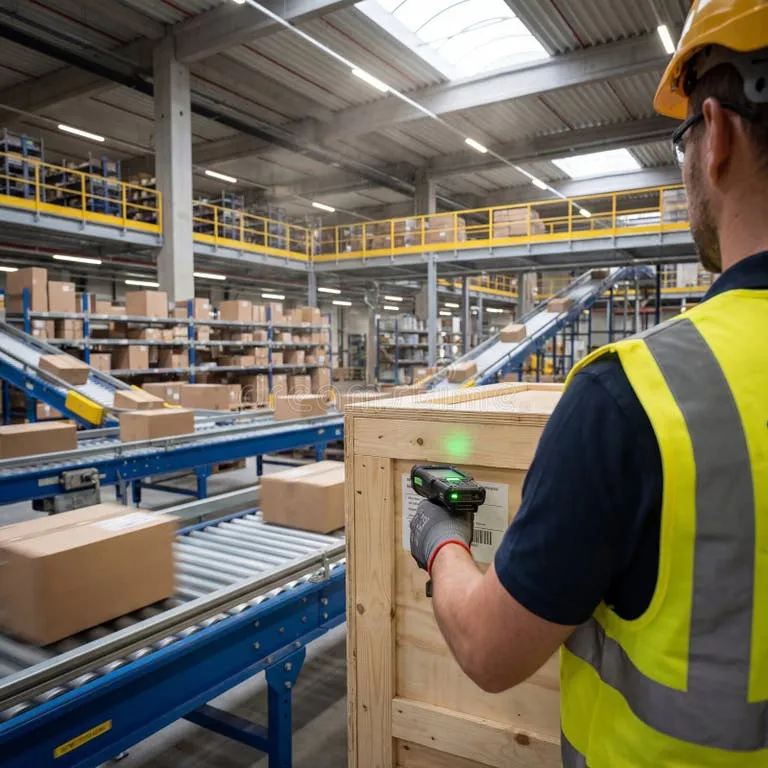
Photo: modern warehouse workers scanning packages logistics, via thumbs.dreamstime.com
When a package arrives from a major US retailer in under 24 hours, the credit usually goes to software. But much of the machinery behind that speed was engineered in Japan, refined over decades in environments where space is scarce, labor is expensive, and mistakes are treated as system failures rather than individual ones. Here are five Japanese warehouse innovations that American logistics giants have absorbed—and what smaller operators can realistically borrow.
1. Urban Micro-Hubs Built on Just-in-Time Logic
Japan's dense cities made sprawling distribution centers impossible long before US land prices did. Japanese retailers responded with compact urban fulfillment points—micro-hubs of a few thousand square feet—replenished on just-in-time schedules rather than stocked in bulk. The result: inventory held close to the customer without heavy carrying costs.
Amazon's expansion of same-day delivery sites in US metro areas follows this template closely. The measurable gain is speed-to-customer: shorter last-mile distances translate directly into lower delivery cost per order.
The mid-sized adaptation: You don't need a national network. One small leased space near your densest customer cluster, replenished daily from your main facility, can cut your average delivery time substantially.
2. Poka-Yoke: Error-Proofing the Floor
Poka-yoke—'mistake-proofing'—originated on Toyota's assembly lines but now lives in American warehouses. The principle: design processes so errors cannot happen, rather than inspecting for them afterward. Think pick-to-light systems that won't advance until the correct bin is scanned, or totes that physically won't fit into the wrong outbound lane.
Japanese warehouses treat this as ritual as much as technology—standardized start-of-shift checks, point-and-call verification where workers physically confirm labels aloud. The measurable gain: mis-pick rates that industry studies place well below one percent in leading Japanese facilities, versus several times that in typical US operations.
The mid-sized adaptation: Point-and-call costs nothing. Scanning verification at two points instead of one costs very little. Both compound into meaningfully fewer returns.
3. Slotting by Turnover Velocity
Japanese distribution centers pioneered rigorous hinban (item-level) slotting: the fastest-moving SKUs live at waist height near the packing station, recalculated continuously as demand shifts. US retailers inherited this through lean logistics consulting, and it now underpins the 'golden zone' slotting in major American fulfillment centers.
The measurable gain: travel time is the largest component of picking labor, and disciplined slotting routinely reduces it by double-digit percentages.
The mid-sized adaptation: Recalculate your slotting monthly using your own sales data. Most small warehouses haven't touched their layout in years.
4. Visual Management: The Warehouse That Explains Itself
Japanese facilities run on genba kanri—floor-level visual control. Floor tape marks exactly where every pallet belongs. Kanban cards signal replenishment before stockouts. A supervisor can assess the health of an entire operation in a ninety-second walk.
Walmart's distribution network adopted visual management aggressively during its lean transformation, and the gains show up in onboarding: new temporary workers reach productivity in days rather than weeks because the floor itself provides instruction.
The mid-sized adaptation: A weekend of floor marking and label standardization, executed with your own team, delivers most of the benefit at trivial cost.
5. Small-Batch Cross-Docking
Rather than storing inbound freight, Japanese grocery and convenience-store logistics—famously refined for the konbini sector—move goods through cross-dock points in small, frequent batches timed to store-level demand. This is why a Tokyo convenience store receives fresh stock several times daily with almost no backroom inventory.
US grocery chains and big-box retailers have adopted the model for perishables, cutting shrinkage and keeping shelves fresher.
The mid-sized adaptation: You may not control your suppliers' schedules, but you can consolidate inbound deliveries into scheduled windows and flow high-velocity items directly to outbound staging rather than shelving them.
The Common Thread
None of these techniques requires exotic technology. They share a philosophy: treat every error, every wasted step, and every square foot as a solvable design problem. That mindset—not the budget behind it—is what American companies of any size can import from Japan.