The Brand Buyback: Why Japan's Product Recovery Strategy Is One of the Most Undervalued Competitive Moves in Modern Commerce

When an American manufacturer issues a product recall, the operational calculus is almost always the same. Logistics teams are mobilized to retrieve the affected units, legal counsel monitors liability exposure, and the communications department prepares messaging designed to minimize reputational damage. Once the immediate crisis has passed, the recovered products are typically destroyed, disposed of, or sold to third-party recyclers at residual value. The episode is treated as a cost to be contained and a chapter to be closed.
In Japan, the same scenario unfolds according to a fundamentally different logic—one that treats the recovered product not as a liability to be extinguished but as an asset to be interrogated, preserved, and ultimately leveraged.
What Japanese Manufacturers Actually Do with Returned Products
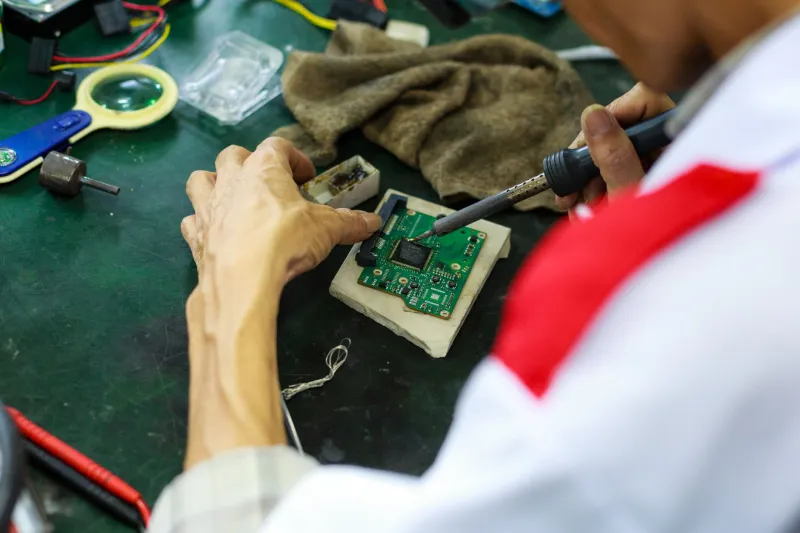
The Japanese approach to product recovery is rooted in a manufacturing philosophy that values the entire lifecycle of a product, including its failure modes. When a Japanese company retrieves defective or recalled items, the recovered units are typically subjected to detailed forensic analysis before any disposition decision is made. Engineering teams examine failure patterns, component degradation, and usage data to extract intelligence that would be impossible to generate through laboratory testing alone.
This information feeds directly back into product development cycles, informing design modifications, supplier quality requirements, and materials specifications. The recovered product, in this framework, is not the end of a commercial transaction—it is the beginning of a research process.
Beyond the engineering dimension, Japanese manufacturers also treat product recovery as a brand stewardship activity. The act of retrieving a product—particularly one that has failed—communicates to the consumer that the manufacturer regards itself as responsible for the product's entire life in the market, not merely its sale. This posture generates a form of trust that is extraordinarily difficult to purchase through advertising and nearly impossible to rebuild once lost.
The Numbers Behind the Philosophy
The financial case for aggressive product recovery is more compelling than it might initially appear. Consider the full cost architecture of a poorly managed recall. Direct costs—logistics, replacement units, customer service labor—are visible and measurable. But the indirect costs are where the real damage accumulates: erosion of brand equity, loss of repeat purchase intent, increased customer acquisition costs to replace defectors, and heightened regulatory scrutiny that elevates compliance overhead for years following a high-profile failure.
Research consistently demonstrates that the manner in which a company handles a product crisis matters as much as the crisis itself in determining long-term brand outcomes. Companies that respond to product failures with visible, proactive, and thorough recovery efforts consistently outperform those that minimize or delay on key brand health metrics in the years following the incident.
Japanese companies have internalized this calculus. The investment in comprehensive product recovery is understood not as a drag on profitability but as an insurance premium on brand equity—one that pays out in the form of sustained customer loyalty and a reputation for accountability that competitors cannot easily replicate.
Supply Chain Intelligence as a Hidden Dividend
There is a second-order benefit to rigorous product recovery that receives even less attention in American business literature: the supply chain intelligence it generates.
When Japanese manufacturers analyze recovered products at scale, they develop a granular understanding of how their components perform under real-world conditions across diverse usage environments. This intelligence is qualitatively different from anything available through pre-shipment quality control. It reveals how a product actually behaves in the hands of actual consumers—the stress it absorbs, the ways it is misused, the failure modes that laboratory testing never anticipated.
This data is enormously valuable in supplier negotiations. A manufacturer that can demonstrate, with recovered product evidence, that a specific component is underperforming its specification has a powerful basis for renegotiating quality standards, pricing, or sourcing decisions. The recovered product, in this sense, generates a return on the recovery investment that never appears on a conventional financial statement but is nonetheless real.
Where American Brands Fall Short
The American approach to product recovery suffers from two related structural problems. The first is a time horizon mismatch. Quarterly reporting cycles create powerful incentives to minimize the visible costs of a recall, which typically means disposing of recovered units as quickly and cheaply as possible. The forensic analysis that Japanese manufacturers conduct takes time and resources that American financial planning rarely accommodates.
The second problem is organizational. In most American manufacturing companies, recalls are managed by legal, compliance, or operations teams whose primary objective is risk mitigation. The engineering and product development functions that would benefit most from recovered product data are rarely integrated into the recall management process. As a result, the intelligence value of recovered units is never captured.
This is not a resource problem. It is a design problem—and it is one that American manufacturers could address without significant capital investment if they chose to restructure the internal ownership of product recovery processes.
A Practical Path Forward for US Manufacturers
American companies that want to capture the strategic value embedded in Japanese product recovery practices do not need to replicate the entire cultural context in which those practices developed. They do need to make several deliberate organizational choices.
Integrate engineering into recall management from day one. Every product recovery process should include a formal mechanism for routing recovered units to engineering review before disposition. Even a sample-based analysis program can generate actionable intelligence at modest cost.
Establish a product intelligence function. Companies that treat recovered product data as a formal input to product development—with dedicated ownership, regular reporting, and explicit linkage to design review cycles—capture value that informal processes consistently miss.
Reframe recovery costs as brand investments in stakeholder communications. Boards and investors who understand the long-term brand equity implications of thorough product recovery are more likely to support the operational investments required. This requires deliberate framing, but the financial logic is sound.
Design recovery logistics for data quality, not just cost efficiency. The manner in which products are retrieved, transported, and stored affects the quality of the forensic analysis that can subsequently be conducted. Recovery logistics designed purely to minimize cost often destroy the evidential value of the units being retrieved.
Reputation Is a Product
Japanese manufacturers have long understood something that American business culture is still working to fully absorb: the reputation of a brand is itself a product, manufactured through thousands of decisions made across the entire lifecycle of every item that carries its name.
The disciplined recovery of failed products is one of the most powerful manufacturing inputs available to a brand that takes this principle seriously. It generates engineering intelligence, reinforces consumer trust, and signals to the market a level of accountability that no marketing campaign can credibly substitute.
For American manufacturers navigating an era of heightened consumer scrutiny and compressed competitive margins, this lesson from Japan's industrial culture is not merely instructive. It may be essential.