Paying More Today to Spend Less Forever: The Hidden Economics Behind Japan's Warranty Culture
Walk into an electronics retailer in Tokyo and you will almost certainly pay more for a washing machine, a rice cooker, or a power drill than you would at a big-box store in Ohio. The sticker price alone can give American consumers pause. Yet Japanese households, on average, replace durable goods far less frequently than their American counterparts, and they file significantly fewer complaints about premature product failure. The reason is not simply that Japanese manufacturers build better products — though that is often true. The deeper explanation lies in an economic architecture that treats the warranty not as a liability hedge, but as a core pillar of brand identity.
The Price You See Versus the Price You Pay
Consumer behavior analysts who study both markets draw a sharp distinction between acquisition cost and ownership cost. In the United States, the dominant retail logic has long favored low entry prices. Manufacturers compress margins at the point of sale, recouping value through accessories, consumables, extended warranty upsells, and — most tellingly — the near-certainty that a product will be replaced within three to five years. This model is so deeply embedded in American commerce that most consumers never pause to calculate what they actually spend across a product's full lifecycle.
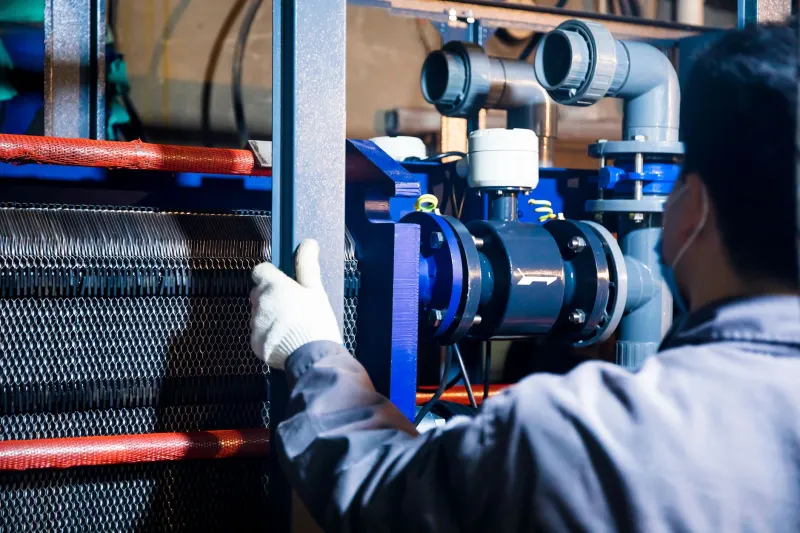
Japanese manufacturers have historically operated under a different assumption. The purchase price is understood to include not just the object itself, but a durable relationship between maker and buyer. Warranties in Japan tend to be longer, more comprehensive, and — critically — honored without the friction that American consumers routinely encounter. Repair infrastructure is not an afterthought; it is a designed component of the product ecosystem. Major Japanese appliance and electronics brands maintain dense networks of certified repair technicians, often in-house, whose expertise extends the useful life of a product well beyond what American planned obsolescence models would consider viable.
What the Engineers Build In
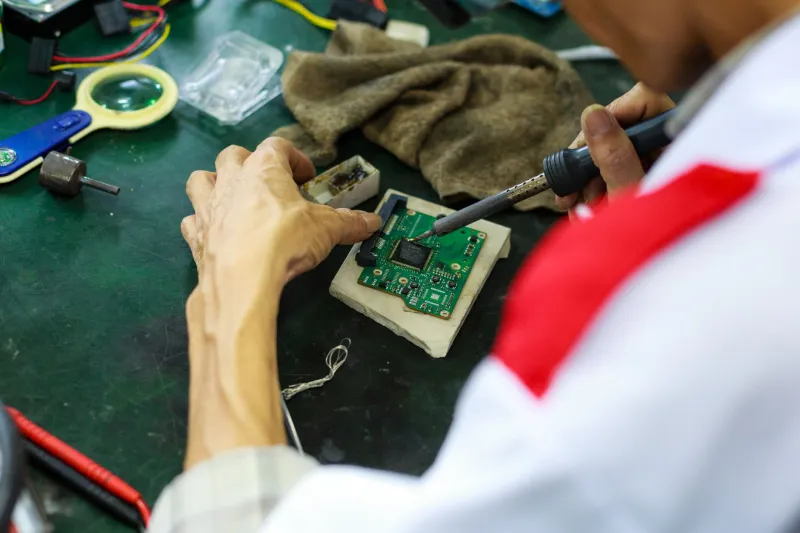
Product engineers at Japanese manufacturing firms describe a design philosophy that begins with repairability as a constraint, not an option. Components are standardized where possible, service manuals are detailed and accessible, and parts availability is guaranteed for periods that would strike many American product managers as commercially irrational — sometimes a decade or more after a model is discontinued.
This is not altruism. It is a calculated investment in brand trust. When a Japanese consumer purchases a high-end kitchen appliance knowing that the manufacturer will service it for ten years, the upfront premium becomes rational. The consumer is not simply buying a product; they are buying a contract of accountability. Warranty specialists who work across both markets note that this framing fundamentally changes the consumer's relationship to the brand. Complaints, when they arise, are handled with an urgency and seriousness that reflects the manufacturer's understanding that reputation — not the individual transaction — is the asset being protected.
The Disposal Economy and Its Hidden Costs
America's preference for lower-priced, shorter-lived goods carries costs that rarely appear on household balance sheets but are very real. Disposal fees, the environmental toll of landfill contribution, the time spent researching and purchasing replacements, and the cumulative expenditure on successive generations of the same product category all erode the apparent savings of the cheaper initial purchase.
Japanese consumers, by contrast, are acutely aware of these downstream costs — partly because Japan's geography and density make waste disposal a visible civic issue, and partly because the cultural value placed on monozukuri, the art and discipline of making things well, shapes consumer expectations from childhood. A product that fails prematurely is not merely inconvenient; it reflects poorly on the maker in a way that carries genuine social weight.
Consumer behavior analysts who have studied purchase decision-making in both countries point to a striking divergence: American consumers tend to evaluate products at the moment of purchase, while Japanese consumers are far more likely to factor in anticipated longevity and after-sales support before committing. This temporal difference in how value is perceived has profound implications for how brands should position themselves in each market.
Implications for American Pricing Strategy
For US companies eyeing the Japanese market, the temptation to compete on price alone is not only strategically misguided — it may be actively counterproductive. Japanese consumers are sophisticated evaluators of long-term value and are often willing to pay a meaningful premium for a brand that demonstrates genuine commitment to product durability and post-sale accountability. American brands that enter the Japanese market with a low-price, high-volume strategy frequently find themselves outmaneuvered by domestic competitors whose warranty infrastructure and repair culture create a stickiness that no promotional discount can replicate.
But the lesson runs in the other direction as well. American brands operating domestically are beginning to face a consumer base that is, slowly and unevenly, becoming more attuned to lifecycle costs. The rise of right-to-repair advocacy, growing consumer frustration with planned obsolescence, and increasing awareness of environmental impact are creating conditions under which the Japanese model becomes not just admirable but commercially advantageous.
Companies that invest in extending product life — through better warranty terms, accessible repair programs, and modular design — are discovering that the resulting customer loyalty generates returns that far exceed the cost of those investments. The math, in other words, is starting to favor the Japanese approach even within the American market context.
Repositioning Accountability as a Premium Feature
The strategic insight for American executives is not simply to copy Japanese warranty structures wholesale. Cultural context matters enormously, and consumer expectations in the US have been shaped by decades of disposability logic that will not reverse overnight. The more actionable takeaway is to understand that warranty and repair culture, when executed with genuine commitment, function as a form of brand capital.
A company that stands behind its products visibly and consistently is communicating something about its values that no advertising campaign can replicate. Japanese manufacturers have understood this for generations. The warranty is not a cost center to be minimized — it is a promise made at the point of sale, and the seriousness with which that promise is kept is precisely what distinguishes brands that endure from those that cycle through consumers without ever earning their trust.
For American companies willing to absorb the short-term margin pressure of building real accountability into their business models, the long-term returns — in customer retention, word-of-mouth, and premium pricing power — suggest that Japan's apparent paradox is, in fact, straightforward economics. Spend more to make it right. Charge accordingly. Keep the promise. The numbers, over time, work out.
EOL Japan covers the intersection of Japanese business practice and American commercial strategy. For more analysis on quality culture, market entry, and cross-Pacific business intelligence, explore our full editorial archive at eol-japan.com.