Built to Last Decades: The Business Case Behind Japan's Long-Horizon Product Support Model
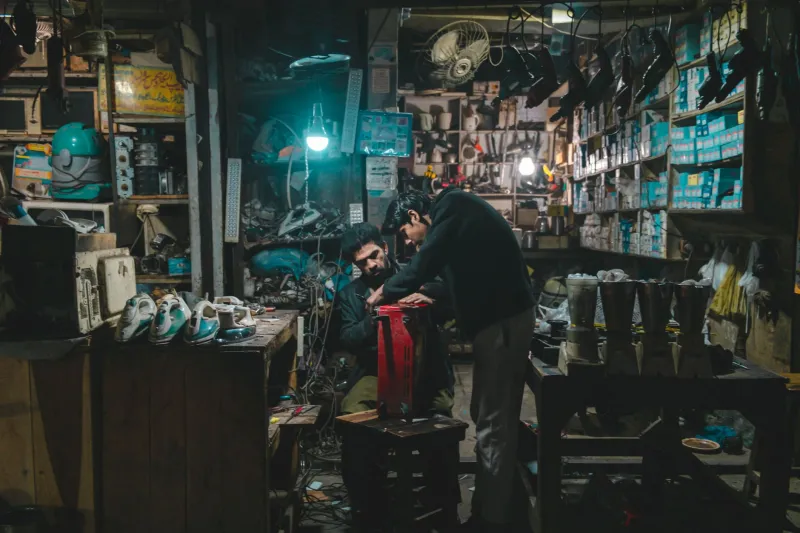
Somewhere in Osaka, a rice cooker manufactured in 1987 is still producing perfectly cooked meals. Its owner has replaced the inner bowl twice, sourced a new lid gasket through the manufacturer's parts catalog, and has no intention of buying a replacement appliance. The manufacturer, for its part, has honored that relationship—maintaining parts availability, offering technical documentation, and treating the product's continued operation as a point of institutional pride.
In the United States, this scenario is nearly inconceivable. The average American appliance brand discontinues spare parts support within seven to ten years of a product's production run. By the time a refrigerator or washing machine reaches its fifteenth birthday, the manufacturer has typically moved on—and so, by design, has the consumer.
The gap between these two approaches is not accidental. It reflects fundamentally different theories of what a product relationship is supposed to be, and what it is worth to sustain one over time.
The Japanese Standard: Parts as a Promise
Japanese manufacturers—particularly in the consumer electronics and home appliance categories—have long operated under an informal but powerful social contract with their customers. Buying a product from a reputable Japanese brand carries an implicit assurance: the company will be there when you need it, not just during the warranty period, but for as long as the product functions.
This commitment is not purely altruistic. It is rooted in the same long-term relationship philosophy that governs Japanese business partnerships, supplier contracts, and customer service culture more broadly. The transaction at the point of sale is understood as the beginning of a relationship, not its conclusion.
Practically, this manifests in parts warehousing strategies that American supply chain managers would find puzzling. Major Japanese appliance manufacturers maintain parts inventories for product lines that have been out of production for 20, 30, or even 40 years. Some firms publish explicit commitments—guaranteeing spare parts availability for a defined period after a model is discontinued, with that period often stretching to 15 or 20 years. The infrastructure required to honor these commitments is not trivial. It involves dedicated warehouse space, ongoing parts cataloging, technician training, and supplier relationships that must be maintained long after volume justifies them economically in the short term.
The Supply Chain Architecture of Longevity
How do Japanese manufacturers actually sustain this model without being crushed by inventory carrying costs? The answer involves a combination of disciplined forecasting, modular product design, and supplier partnerships that would be familiar to students of the Toyota Production System.
First, Japanese manufacturers invest heavily in predicting long-term parts demand at the point of product design. Components that are likely to fail over time—seals, belts, heating elements, control boards—are identified early, and minimum production runs are negotiated with suppliers that account for decades of replacement demand rather than just initial production volume.
Second, modular design philosophy means that a single component can often serve multiple product generations, reducing the proliferation of unique parts that must be individually inventoried. This is not merely a cost-saving measure; it is an engineering discipline that reflects a commitment to serviceability from the earliest stages of product development.
Third, supplier relationships in Japan's manufacturing ecosystem are structured around long-term mutual obligation—the same philosophical framework that governs consumer relationships. A parts supplier is not simply a vendor to be replaced when costs rise. It is a partner whose continued viability is understood as the manufacturer's partial responsibility. This creates a supply chain that is more resilient over long time horizons, even if it sacrifices some short-term pricing flexibility.
What American Brands Are Leaving Behind
The American appliance and consumer electronics industry has, for decades, optimized around a different set of variables: upgrade cycle velocity, initial unit margins, and the assumption that consumers will replace rather than repair. This model has been enormously profitable in aggregate—but it carries hidden costs that are becoming increasingly visible.
The most obvious cost is customer attrition. A consumer who cannot get a part for a product they love does not simply buy a new version of that product. Research on consumer loyalty consistently shows that service failures—including parts unavailability—are among the most damaging events in a brand relationship. The customer who replaces a beloved appliance under duress is not a satisfied upgrader. They are a defector, and they are making their next purchase decision with frustration, not enthusiasm.
The second cost is competitive vulnerability. As Japanese brands have expanded their US market presence in categories from kitchen appliances to power tools, their long-term service commitments have become a genuine differentiator among older, more deliberate consumer segments. These are not low-value customers. Americans over 55 control a disproportionate share of consumer spending, and they skew heavily toward brands they can trust to be present over time.
The third cost is regulatory. A growing number of US states have enacted or are considering Right to Repair legislation, which mandates that manufacturers provide parts and repair documentation for defined periods after product manufacture. Companies that have already built long-horizon support infrastructure—as Japanese manufacturers have—are far better positioned to comply with these requirements without operational disruption.
The Revenue Opportunity in the Aftermarket
Beyond defensive positioning, there is a genuine revenue story in long-horizon parts support that American brands have largely failed to develop. Japan's appliance aftermarket is a robust commercial ecosystem, with authorized service networks, certified technicians, and consumer willingness to pay for quality repairs on products they trust.
In the United States, this ecosystem is fragmented and underserved. Third-party repair operators work with inconsistent parts quality and limited manufacturer support, leaving consumers with an unsatisfying choice between expensive authorized service and unreliable independent repair. A US brand that chose to invest in a genuine long-horizon service network—with manufacturer-supplied parts, certified technicians, and transparent pricing—would be entering a market with minimal quality competition and substantial unmet demand.
The economics are not obvious at first glance. Parts margins are thinner than new product margins, and service networks require ongoing investment. But the lifetime value calculation changes dramatically when parts revenue, service fees, and loyalty-driven repurchase rates are modeled together over a 20-year consumer relationship rather than a three-year upgrade cycle.
A Different Theory of What a Product Is
At its core, Japan's long-horizon product support model reflects a theory of what a manufactured product actually is. In Japanese manufacturing culture, a product is not a disposable artifact of a transaction. It is a representation of the maker's craft, a physical expression of the company's values, and an ongoing responsibility.
American brands that are willing to adopt even a portion of this philosophy—starting with extended parts availability commitments, modular design investment, and transparent service networks—will find that the market is more ready to reward them than the upgrade-cycle model has ever allowed them to discover.