Reverse Engineering Profit: How Japan's End-of-Life Business Ecosystems Are Unlocking a $50 Billion Frontier for American Entrepreneurs
In most American boardrooms, the phrase "end of life" signals a line item to be minimized—a logistics headache, a disposal fee, a footnote in a sustainability report. In Japan, the same phrase has historically triggered a fundamentally different instinct: opportunity. Over decades of resource scarcity, regulatory pressure, and cultural emphasis on craftsmanship and longevity, Japanese manufacturers and service companies have built some of the world's most sophisticated reverse-logistics ecosystems. The result is a set of replicable business models that American entrepreneurs are only beginning to recognize—and that carry substantial financial upside for those who move decisively.
The global circular economy is projected to represent trillions of dollars in economic activity over the coming decade. Within that broader figure, the specific market segments where Japanese end-of-life frameworks have proven most effective—used electronics, refurbished industrial machinery, and consumer goods recirculation—represent a conservatively estimated $50 billion-plus opportunity for US-based operators willing to adopt structural lessons from their Japanese counterparts.
Why Japan Built What America Hasn't
To understand why Japan developed these systems, context matters. The country imports the overwhelming majority of its raw materials, making resource efficiency not merely an ethical preference but an economic imperative. Legislation such as Japan's Home Appliance Recycling Law, enacted in 2001, mandated that manufacturers bear financial responsibility for collecting and processing retired products—decades before comparable frameworks gained traction in the United States. That regulatory environment forced companies to treat end-of-life logistics as a core competency rather than an afterthought.
The cultural dimension reinforces the structural one. The Japanese concept of mottainai—a term expressing regret over waste—permeates consumer attitudes and corporate philosophy alike. Products are expected to be maintained, repaired, and eventually reintegrated into productive use. This orientation has produced companies whose entire business models are built around extracting value from goods that Western competitors would simply retire.
Component Refurbishment Networks: The Architecture of Retained Value
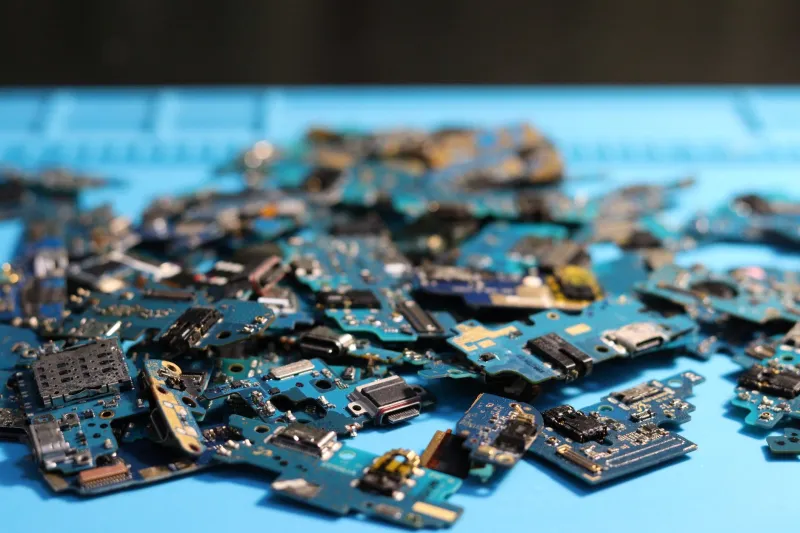
Perhaps the most instructive model for American entrepreneurs is the component-level refurbishment network that Japanese electronics and industrial firms have perfected. Rather than treating a retired product as a single disposable unit, these networks disaggregate it—cataloging, testing, and grading individual components for resale into secondary markets.
Japanese firms such as Ricoh and Canon have operated formal refurbishment divisions for decades, remanufacturing copiers and cameras to specifications that rival original equipment. More relevant for American startups, a robust ecosystem of smaller specialist firms exists beneath those corporate giants—companies that focus exclusively on sourcing retired industrial equipment, extracting serviceable parts, and supplying them to manufacturers who need cost-effective replacements for legacy systems.
For US entrepreneurs, the opportunity lies in building analogous networks domestically while leveraging Japanese sourcing partnerships. American manufacturers running older production lines frequently struggle to source components for equipment that original manufacturers have discontinued. A business that establishes reliable pipelines from Japanese refurbishment networks—or replicates the disaggregation model for US-origin equipment—addresses a genuine supply pain point with strong margin potential.
Warranty-as-a-Service: Monetizing the Afterlife of Products
Another framework with direct US applicability is what might be termed warranty-as-a-service—a model Japanese companies have refined into a sophisticated revenue stream. Rather than treating post-sale service obligations as a cost to be contained, leading Japanese manufacturers have restructured extended warranties and maintenance contracts into subscription-style offerings that generate predictable, recurring income.
The underlying logic is straightforward: a company with deep knowledge of how its products degrade over time is uniquely positioned to price and deliver maintenance services at a profit. Japanese firms have taken this further by applying the same logic to products they did not originally manufacture—acquiring retired equipment, refurbishing it to a defined performance standard, and then offering it to customers bundled with a service contract. The customer receives a lower upfront cost; the company captures ongoing revenue and retains the asset at end of contract for another refurbishment cycle.
American mid-market firms in sectors such as commercial foodservice equipment, medical devices, and industrial tooling are particularly well-positioned to adapt this model. The installed base of aging equipment in these categories is substantial, customer switching costs are high, and the technical expertise required to execute refurbishment creates meaningful barriers to entry.
Consumer Goods Recirculation: The Retail Dimension
Beyond manufacturing and industrial applications, Japanese retail has developed its own set of end-of-life monetization strategies that translate meaningfully to the US consumer market. The Japanese secondhand retail sector—anchored by chains such as Hard Off and Book Off—operates at a scale and sophistication that dwarfs comparable American operations. These are not thrift stores in the conventional sense; they are highly systematized recirculation platforms with standardized grading processes, professional merchandising, and omnichannel inventory management.
What distinguishes the Japanese approach is the integration of buyback programs directly into the original retail experience. Consumers purchasing new goods are simultaneously enrolled in structured trade-in pathways, creating a closed loop that drives repeat purchase behavior while supplying the secondary market with consistent inventory. American retailers have experimented with trade-in programs—particularly in consumer electronics—but rarely with the operational rigor or brand investment that Japanese operators apply.
For American entrepreneurs, the actionable insight is the value of treating buyback infrastructure as a customer acquisition tool rather than a cost center. A company that makes the return of its products genuinely convenient and financially rewarding builds a loyalty mechanism while simultaneously securing a supply chain for refurbished inventory.
Building the Bridge: Practical Entry Points for US Operators
American entrepreneurs looking to enter this space do not need to construct end-of-life ecosystems from scratch. Several practical entry points exist.
First, sourcing partnerships with established Japanese refurbishment networks offer immediate access to graded inventory across electronics and industrial equipment categories. Japanese exporters in this space are actively seeking US distribution partners capable of navigating domestic regulatory requirements and reaching end customers efficiently.
Second, licensing or adapting Japanese operational methodologies—particularly grading standards and refurbishment protocols—can accelerate the credentialing process with B2B buyers who require documented quality assurance before purchasing reconditioned goods.
Third, the growing US regulatory environment around extended producer responsibility is beginning to create structural conditions similar to those that drove Japanese innovation. Companies that build reverse-logistics competency now will be positioned as compliance partners when mandatory frameworks arrive, rather than scrambling to adapt under regulatory pressure.
The Competitive Window Is Narrowing
The American market's relative underdevelopment in end-of-life business infrastructure represents both an opportunity and a warning. The same conditions that create the $50 billion-plus opportunity—fragmented secondary markets, underinvested reverse logistics, and limited consumer trust in refurbished goods—also represent the barriers that have kept the space accessible. As venture capital flows increasingly into circular economy platforms and larger retailers develop proprietary trade-in capabilities, the window for independent operators to establish defensible positions will compress.
Japanese companies spent decades building what they have. American entrepreneurs will not replicate those systems overnight. But the frameworks are documented, the sourcing relationships are available, and the demand is demonstrably present. The question is not whether end-of-life business models will become a significant feature of the American commercial landscape—it is which operators will move early enough to define them.